The first seventy-two hours
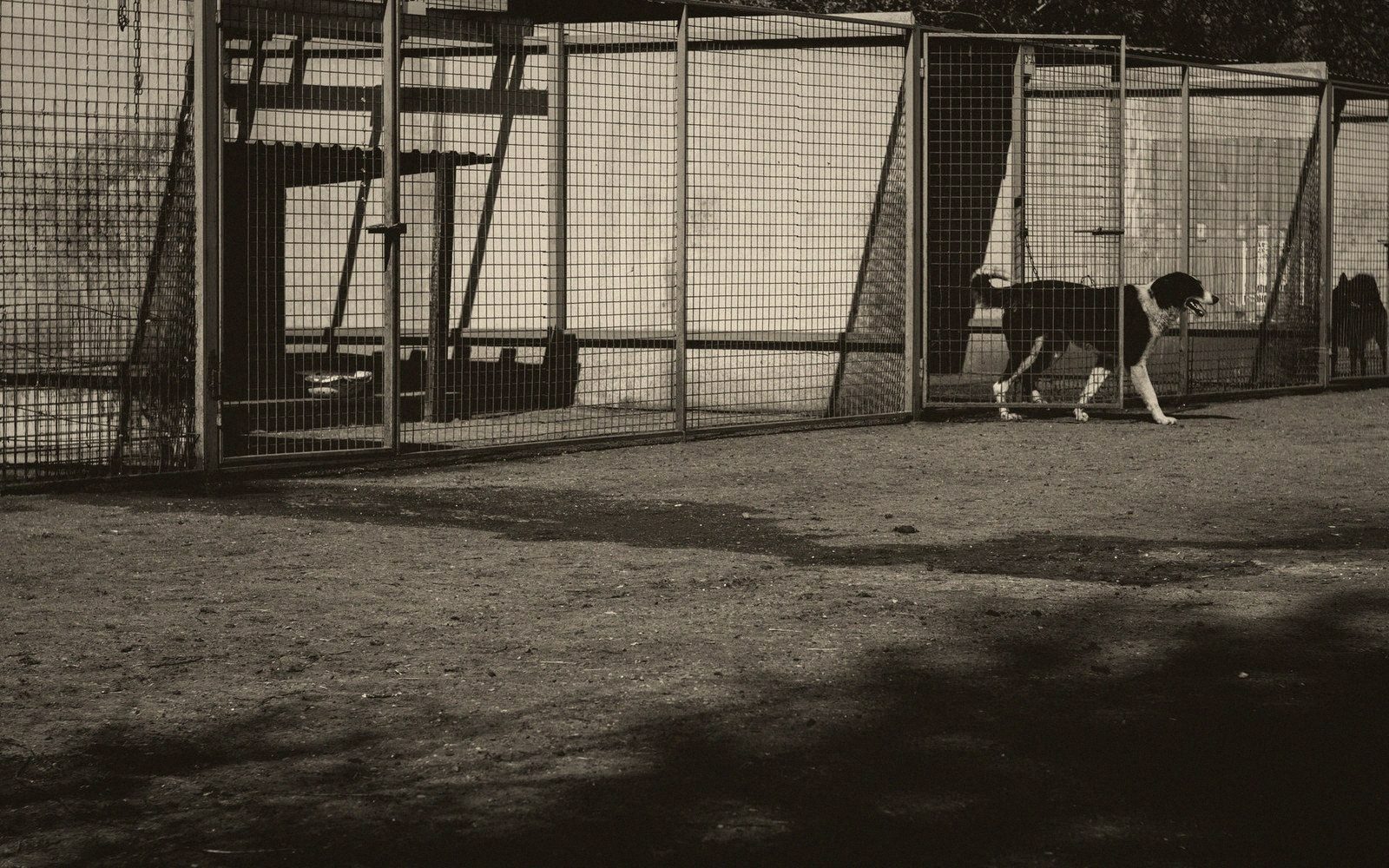
An animal arriving at a shelter is at its worst: frightened, over-stimulated and nothing like it will be in a fortnight. Almost every assessment made in this window turns out wrong, which is why good practice is to record and wait.
The sequence
an animal's route through, in orderIntake
Arrival, the card, and the first seventy-two hours.
4 entries 02The Kennel Weeks
Runs, rotas, noise and length of stay.
4 entries 03Assessment
What a test asks and what it cannot tell you.
3 entries 04Fostering
The single thing that changes an animal's chances most.
3 entries 05The Match
How a match is made, and how it is refused.
4 entries 06The Return
The one everybody dreads, and what it teaches.
3 entries 07Decompression
The fortnight after the animal gets home.
3 entries 08The Trade
The people who do this work.
3 entriesEvery entry follows the animal's own sequence and says who does the work at that stage. Where a practice varies between shelters, the entry says so.
Worth reading first
three entries, chosen
Why fostering changes everything
A foster placement gives you the one thing a kennel cannot: information about the animal in a house.
03
What it cannot tell you
How the animal will be in a home, with a routine, after three weeks of sleep.
06
The return rate
A low rate can mean good matching or a shelter that will not take animals back. The figure alone says nothing.