The first seventy-two hours
An animal arriving at a shelter is at its worst: frightened, over-stimulated and nothing like it will be in a fortnight. Almost every assessment made in this window turns out wrong, which is why good practice is to record and wait.
What the animal is actually experiencing01.1
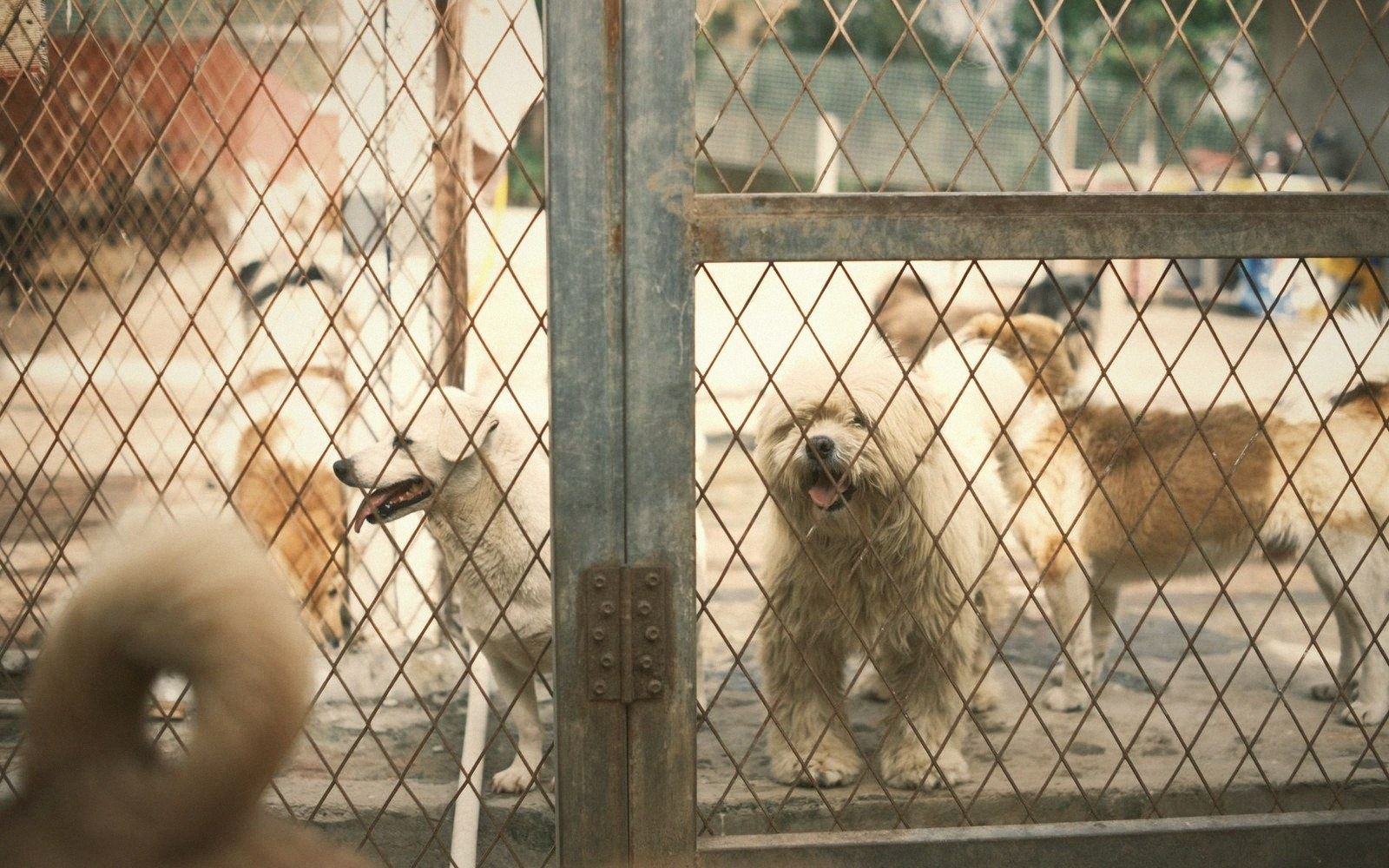
Arrival is an assault. In the space of a few hours, an animal loses its familiar smells, its routines, the sounds it has learned to read and, often, the people it trusts. What replaces all of that is fluorescent light, concrete, the noise of animals it has never met, and strangers moving with purpose through its immediate space. Even an animal that arrives calm — ears soft, tail low but not tucked — is almost certainly suppressed rather than settled. The nervous system is running a threat assessment, and everything in a kennel block registers as threat.
The practical consequence is this: any behaviour you observe in the first seventy-two hours is behaviour under acute stress. The dog that snaps when a hand reaches toward its crate on day one may be one of the softest animals in the building by day five. The cat pressed into the back corner of its pod, refusing food, hissing if approached, may turn out to be sociable and food-motivated and impossible to dislodge from laps within two weeks. The observation is real. The interpretation is not.

This is not a sentimental point about animals deserving a chance. It is an empirical one: assessments conducted in the immediate intake window carry a high false-negative rate for both fearfulness and aggression. Acting on them produces poor data, and poor data produces poor matches. The cost is borne by the animal.
What good practice looks like in practice01.2
The first thing that happens at most shelters is a brief, low-intervention admission: the animal is moved into its space with as little handling as is safely possible, offered water, and left. No formal assessment, no extended handling, no introduction to volunteers. Some facilities dim lighting in admission areas or use visual barriers — solid panels between runs, box dens inside cat pods — to reduce the sensory load. The reasoning is straightforward: the more stimulus the animal has to process, the longer it takes to reach anything like baseline.
What does happen in those first hours is documentation. Staff note the animal's posture on arrival — body low or upright, eye contact or avoidance, eating or refusing food, vocalising or silent — and they note it again at each check without adding interaction. This is the intake card being built in real time: a record not of who the animal is, but of exactly how it presented on arrival, which is the only honest thing that can be written down at that point.
Strays and surrenders arrive on different trajectories. A surrendered dog whose owner has spent thirty minutes in the intake office completing paperwork has often been in the building longer before it reaches its run, and may be more over-stimulated on arrival, not less, because the separation stress compounds the unfamiliar environment. A stray with no history arrives with none of the behavioural context that a surrender form provides, but may also arrive without the specific anxiety of a witnessed abandonment. Neither is easier to read; they are simply different, and the differences compound from the first moment.
Feeding becomes an early data point, handled carefully. A refused meal on day one means almost nothing. A refused meal on day three begins to mean something — though what it means is not yet clear, and the note should say so rather than reaching for a label. Animals that eat readily within the first twenty-four hours are not necessarily less stressed; some animals stress-eat. Staff who have spent years doing this learn to read the quality of the eating — hasty and defensive, or relaxed and thorough — rather than the fact of it.
What replaces all of that is fluorescent light, concrete, the noise of animals it has never met, and strangers moving with purpose through its immediate space.
The window closes, but slowly01.3
Somewhere between day three and day five, most animals begin to shift. Not to settle — that takes much longer — but the acute suppression or acute reactivity of arrival begins to modulate into something closer to the animal's underlying character. A dog that has been silent and immobile may start to bark, or to wag, or to engage with the door of its run. A cat that has been pressed flat against the back of its pod may move forward to sniff at an offered hand. These shifts are significant and should be recorded specifically: the date and time, what changed, who was present, what preceded it.
This is the period — days three through seven, roughly — when initial observations that were provisional start to tell a more coherent story, though experienced staff will insist on extending that window further before drawing any firm conclusions. The behaviour testing that many shelters conduct carries its own limitations even when administered well after intake; conducted in the first seventy-two hours it is largely asking the wrong question at the wrong moment.
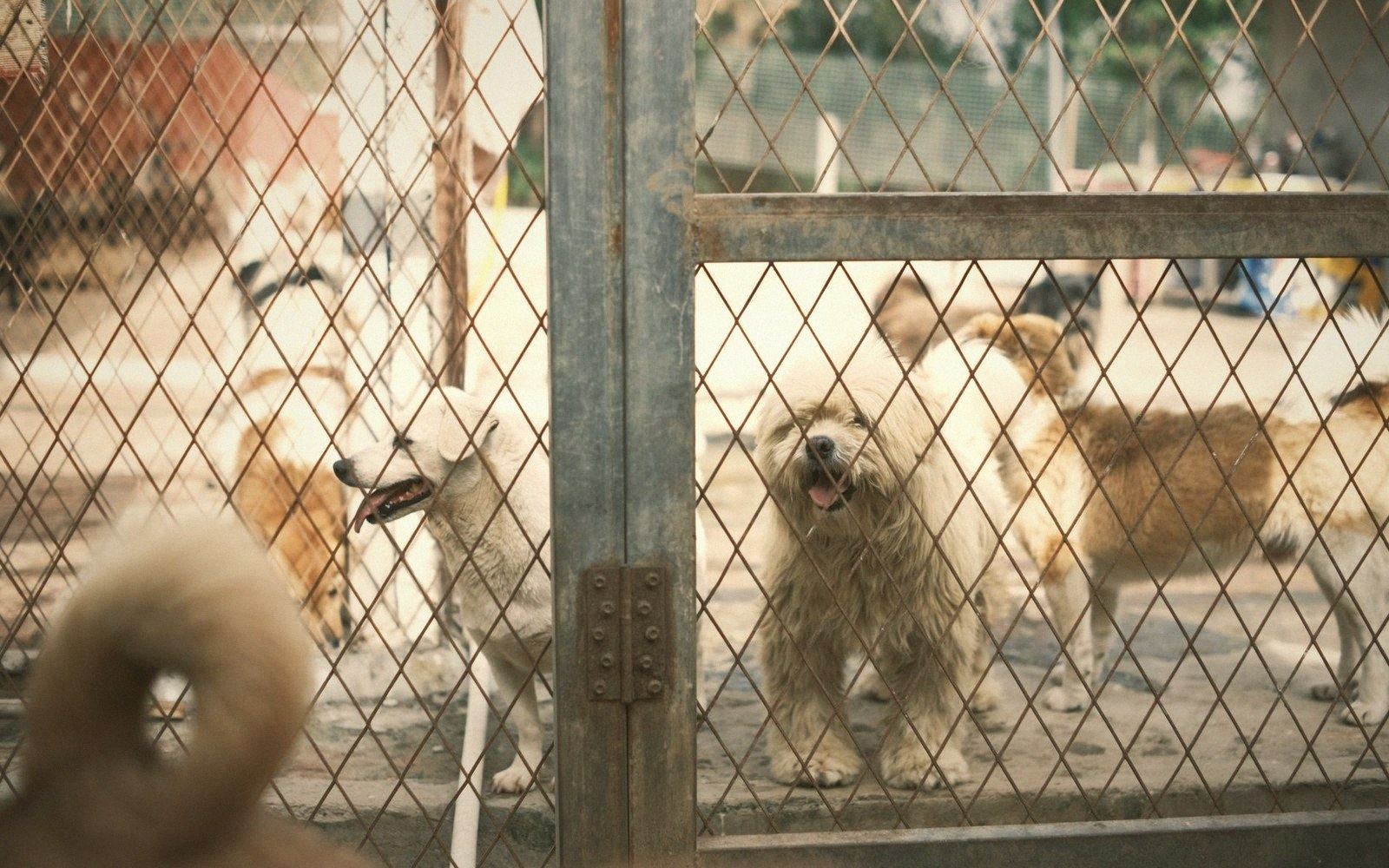
What the first seventy-two hours genuinely yield, if they are documented carefully, is a baseline against which change can be measured. If a dog arrives in a collapsed, shut-down state and is still in that state at day seven, that is important information — not diagnostic, but important. If it has moved to exploratory and social within four days, that is also important. The trajectory matters more than any single snapshot. The observation that will eventually tell you most about this animal is not the first one; it is what the first one looks like in comparison to the fourth, and the seventh, and the fourteenth.
That accumulation of observation — the cleaning notes, the feeding logs, the quiet notations from the person who opens the run at six in the morning — builds something more reliable than any formal assessment conducted on a frightened animal in the first hours after arrival. It is slow, and it is sometimes frustrating when pressure is building on space, but it is the work. An assessment written on arrival and acted upon without that accumulation is, at best, a guess recorded with authority.
Staff managing the first-week window also do something that is easy to underestimate: they moderate their own expectations, and they moderate the expectations of volunteers who are newly in love with an animal they've met once through a run door. The animal that seems to be reaching for connection on day two may be resource-guarding proximity to a human body — one of the few predictable things in an unpredictable environment. Warmth toward a staff member is not evidence of a dog's suitability for a particular home. It is evidence of a dog trying to manage its environment with whatever social tools it has available. Both things can be true simultaneously, and experienced staff hold both.
The first seventy-two hours is where the record begins, not where the picture is formed. Every note made in that window is provisional. That is not a failure of observation; it is what honest observation looks like.