The home visit
A chance to see the household, not to inspect it — and the difference matters.
What it is actually for05.1
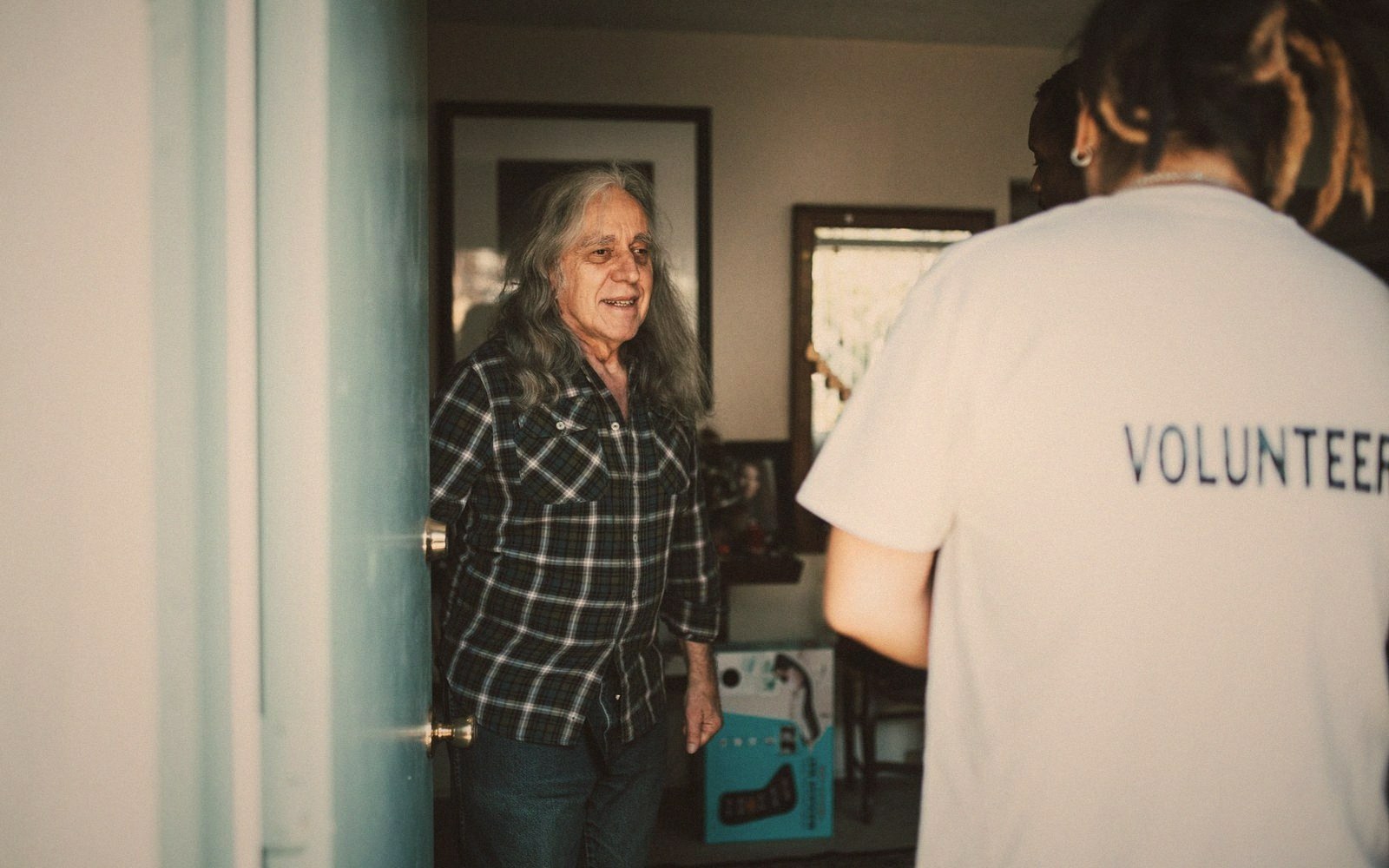
The home visit is not a white-glove inspection. The person conducting it is not looking for pristine carpets or a garden shed with planning permission. They are looking at the gap between what someone said in an application and how they actually live — and at the dozen small things no application form can ask.
Does anyone in the household know the visit is happening? That question alone tells you something. A partner who seems surprised, a child who immediately tries to grab the visitor — these are not disqualifying, but they are information. The home visit is the one moment when the shelter or foster coordinator sees the household as a unit rather than as a completed form.
Fencing is the exception to the "rarely the house" rule. For a dog assessed as an escape risk, or any dog with a history of running, the garden matters — its height, the gate latches, the gaps under a panel. This is practical and specific, not aesthetic. A crumbling fence that a specific animal will not challenge is fine. A six-foot fence that a specific animal will test is not the point; it's whether that fence will hold. The assessor is thinking about the match, not a generalised standard.
What else gets noticed: proximity to a busy road and whether the applicant has thought about it; the presence of other animals not mentioned on the form; a flat that turns out to be on the fourth floor when stairs are a consideration. None of these are automatic rejections. All of them open a conversation.
The visit also does something structural that the phone or video call cannot: it shows the applicant that the organisation is serious. An adopter who has welcomed someone into their home has made a commitment, and they know it. The visit is partly a signal going both ways.
Increasingly, home visits are conducted remotely — a video call in which the applicant walks through the relevant spaces. This works better than critics expected, not because it replicates the in-person visit but because the conversation it opens is the same conversation. The assessor can ask the partner to step into frame, ask to see the garden, notice the crate already assembled in the corner. What is being assessed is attention and honesty, and those travel over video.
They are looking at the gap between what someone said in an application and how they actually live — and at the dozen small things no application form can ask.
A home visit that reveals nothing is almost always a successful one. It has confirmed that what was said was true, and the assessor leaves having added weight to a decision that was already leaning in one direction. When it does reveal something, the visit has done exactly its job.