What settling back looks like
The behaviour that appears in week three is not new behaviour. The animal just feels safe enough to show it.

The third week is when the real animal turns up07.1
The first fortnight of rehoming tends to look manageable. A dog that came in labelled anxious stays close, eats well enough, causes no scenes. A cat hides for days, then accepts the routine. The new owner reads this as progress — and it is, but not only that. Inhibition is doing quiet work too. An animal in unfamiliar surroundings defaults to watchfulness. It does not yet know which behaviours are safe to try.
Then, somewhere between day fourteen and day twenty-five, things shift. The dog that seemed biddable starts testing exits. The cat who barely moved begins waking its owners at four in the morning. A dog that showed no resource-guarding at all snaps over a chew. These changes are easy to read as deterioration. They are almost always the opposite.
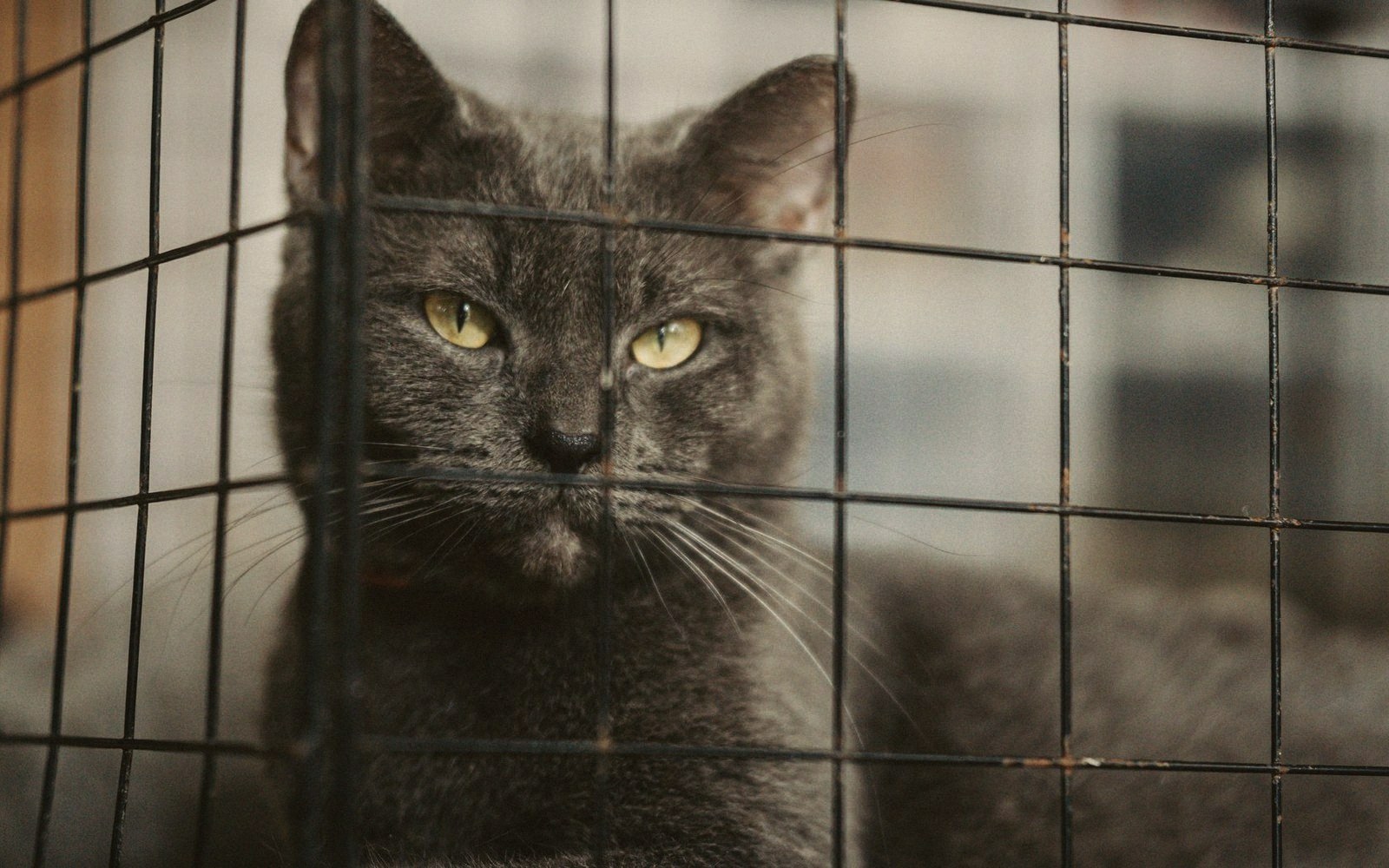
What you are seeing is the animal's actual personality coming through once the stress suppression has lifted. Chronic wariness uses energy; when that vigilance relaxes, other drives — curiosity, sociability, frustration, playfulness, and yes, challenge — have room to surface. The shelter behaviour profile, assembled under duress in a kennel, was always a partial picture. What a test asks in a stressed animal on a given morning is not what you get once that animal has slept well for three weeks.
This is not a crisis point, though it is often the moment owners contact the shelter in a panic. It is also, handled badly, the moment returns happen. The mismatch was always there; now it is visible.
Owners who were warned about this window tend to cope better. A household that was told in advance — the quiet fortnight of low stimulation and predictable routine — and that kept expectations modest in weeks one and two, usually reaches week three in better shape than one that spent the first days showing the animal off to everyone it knows.
The practical advice is unchanged at this point: keep the routine tight, respond to new behaviours consistently rather than reactively, and don't mistake personality for a problem. If a dog is testing a boundary it did not test in week one, it is not getting worse. It is getting comfortable enough to be itself. That is what the whole process is for.
What you are seeing is the animal's actual personality coming through once the stress suppression has lifted.
Where new behaviour is worrying rather than simply surprising — where there is genuine guarding, fear responses, or anything that involves a safety concern — that is a conversation with the shelter's behaviour staff, or a qualified behaviourist. It is not a reason to return the animal before those conversations happen.