Who does this work
The people a shelter runs on, and what they actually do08.1
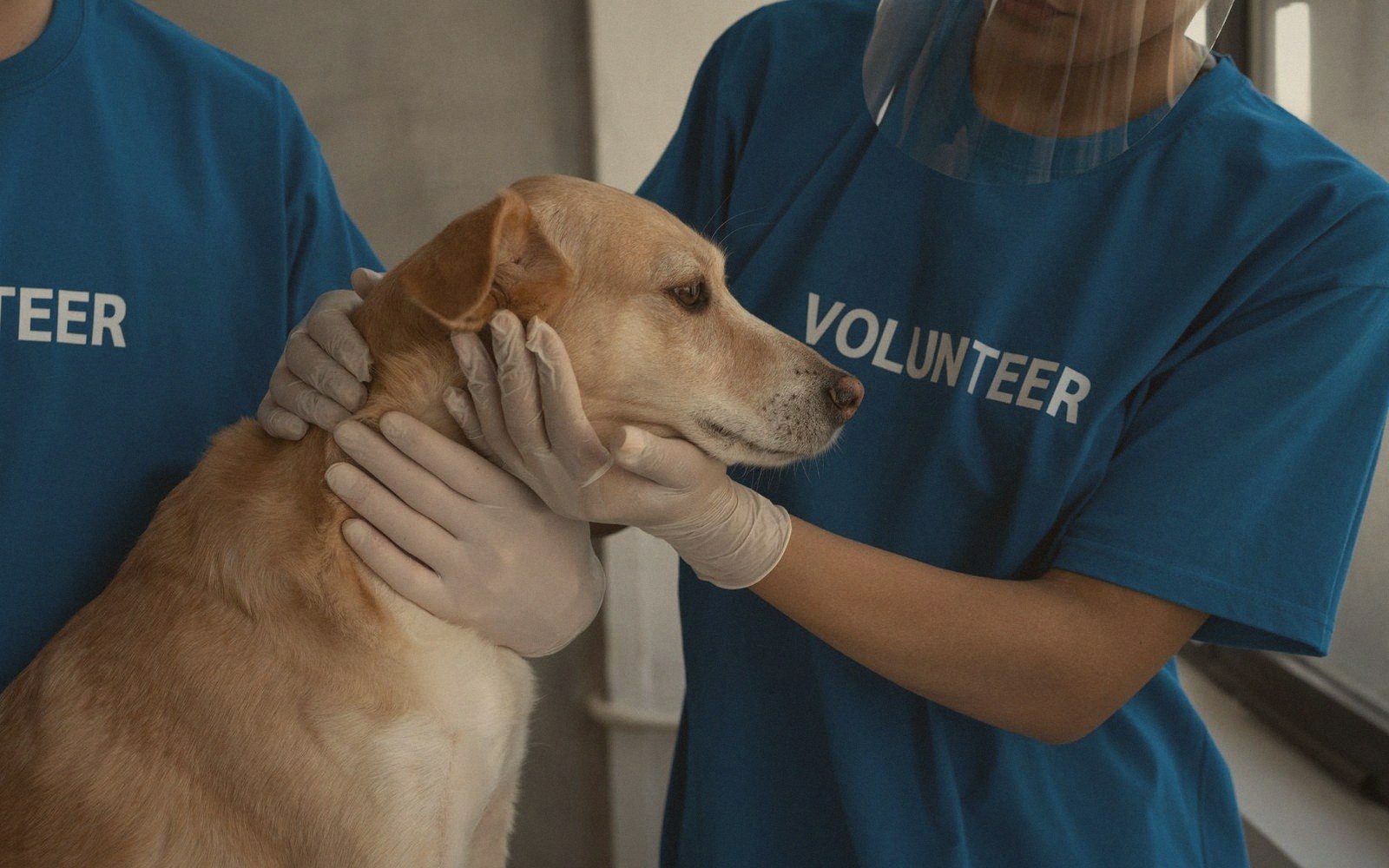
Rehoming is labour-intensive in a way that is easy to underestimate from the outside. The process that moves an animal from the road or an owner's kitchen to a settled home involves a surprising number of distinct roles, most of them poorly paid and many of them filled by people who have been doing the same job for a decade or more.
The kennel floor08.2
The largest group in any rehoming organisation is the people who clean runs, fill bowls, change bedding and walk the same dogs every morning at six. Kennel assistants do the physical bulk of the work, and they are also — whether or not their job description says so — the primary behavioural observers. They notice that the brindle lurcher stopped eating on Tuesday, that the black terrier has started spinning, that the cat in bay four is finally using the top shelf. Weeks of those observations, accumulated and written down, are often more useful than any formal behaviour test.
This work is hard on the body and hard on the mind. Turnover is high among people new to it; the ones who stay tend to stay for a long time, and the institutional memory they carry — which animals are triggered by wheelie bins, which dog needs to be walked before the others are let out — is genuinely irreplaceable.
Behaviour and assessment staff08.3
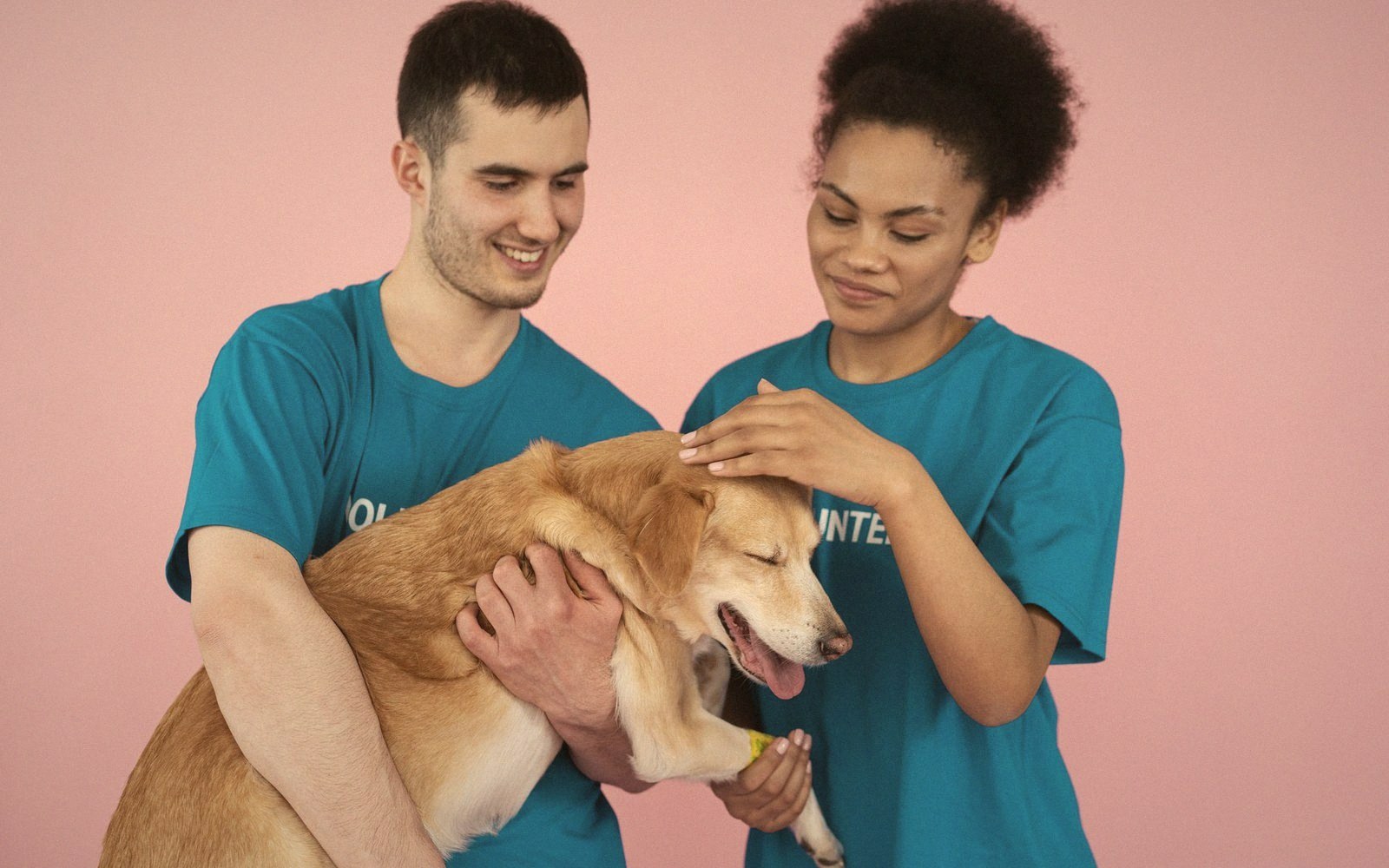
Larger organisations employ behaviour staff whose role sits above the daily kennel work: conducting formal temperament assessments, advising on placement, writing the notes that travel with an animal into a foster home or an adoption. In smaller operations, the same person may be simultaneously cleaning runs and doing the assessment work; the job title varies but the function does not.
The skill this role requires is specific. Reading an animal that is frightened, shut down or performing for food in an unfamiliar enclosure, and forming a reasonable view of who it is likely to be in a house, is not a thing you learn from a manual in a weekend. Experience matters. So does honesty about the limits of what assessment can establish — what a test cannot tell you is as important a discipline as knowing how to run one.
Drivers and transport08.4
Animals move. Strays come in from wardens. Transfers happen between organisations when a dog sits in a high-intake area while a kennel space sits empty elsewhere. Foster animals need to be collected and returned. Someone has to drive.
Transport volunteers and paid drivers are frequently invisible in the public-facing story of rehoming, but their role is a genuine operational dependency. A network that moves animals across regions to balance capacity needs coordination, fuel, vehicles and people willing to do long motorway runs on a Saturday morning.
They notice that the brindle lurcher stopped eating on Tuesday, that the black terrier has started spinning, that the cat in bay four is finally using the top shelf.
The phones and the admin08.5
Someone answers the enquiries. Someone processes the adoption applications, chases references, books home visits and sends the follow-up messages to people who adopted six months ago. In a small rescue, this is often whoever has a spare hour. In a larger one, there may be a dedicated team — and the quality of that team's communication has a direct effect on the quality of matching, because the information gathered in those early conversations shapes everything that follows.
The person on the phone is also, routinely, the person who says no. Saying no is a skilled act that this role performs dozens of times a week, usually without formal training in how to do it well.
Foster carers08.6
Foster carers are not employees. They work for expenses, when they are reimbursed at all, and they provide what no kennel can: a home environment, a routine, the chance to observe an animal in conditions that resemble where it is going. A good foster carer is a careful reporter. What they notice and pass back to the organisation — how the animal is with other dogs, with visitors, with being left alone — is the raw material a good match is built from.
Recruiting and retaining them is its own challenge. Losing a foster carer, when they burn out or move away or fall in love with the animal and adopt it themselves, removes capacity that takes months to replace.