Runs and rotas
The kennel day runs on a timetable. When the timetable bends, it bends in a predictable order — and animals feel every gap.
The shape of a kennel day02.1
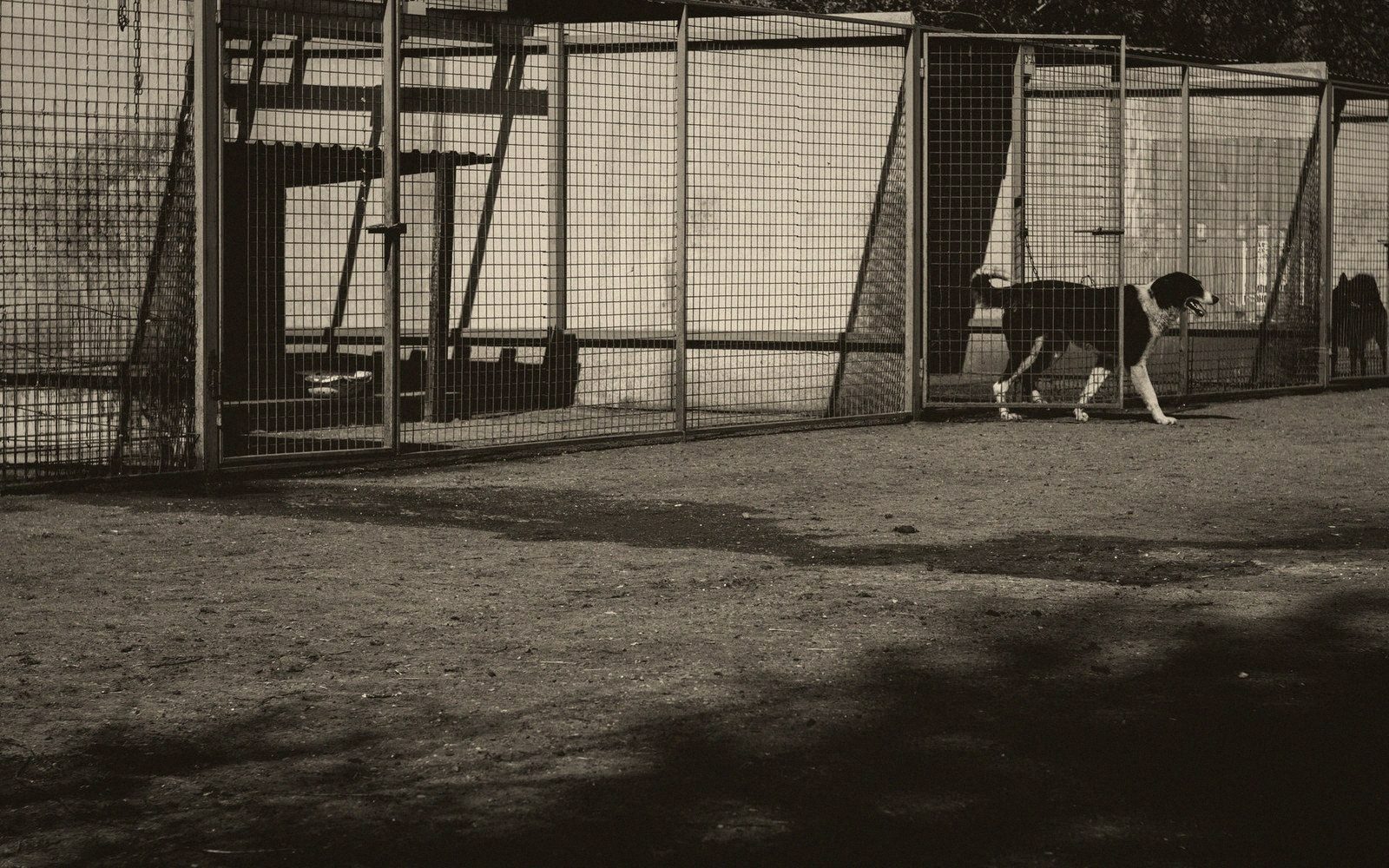
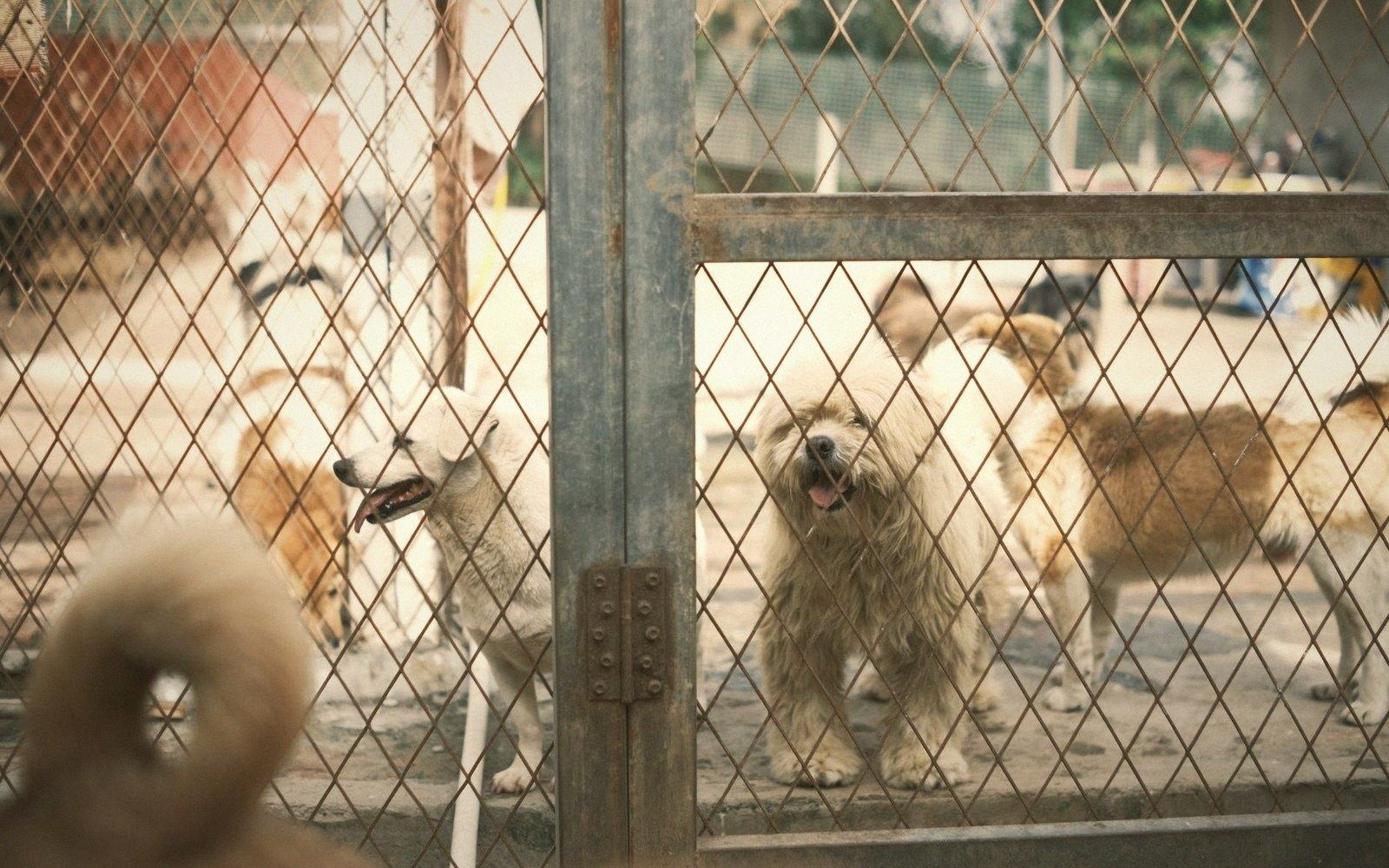
A shelter kennel block operates on a rotation that most visitors never see. Before the public arrives, staff are already an hour into a sequence that most commercial workplaces would find punishing: kennel doors opened in the same order each morning, animals let into outside runs, indoor areas cleaned, food prepared and delivered, fresh water laid on, everything logged. The order matters. Animals who know the sequence settle into it; disruption to timing — even a late feed — raises arousal levels in the whole block, and one unsettled dog communicating through the mesh is enough to destabilise its neighbours.
Mid-morning brings the first walking slots. These are rarely leisurely: a kennel assistant managing a block alone may have fifteen to twenty animals and a two-hour window before afternoon cleaning begins. Walking is not only exercise — it is the main source of environmental novelty for an animal that will otherwise spend twenty-two hours in a run. Enrichment, if it is scheduled at all, fits into the gaps between walks: a stuffed feeder, a scent trail laid in the run, something to shred. Late afternoon is feeding again, a final clean, bedding checked. The day closes in the same order it opened.
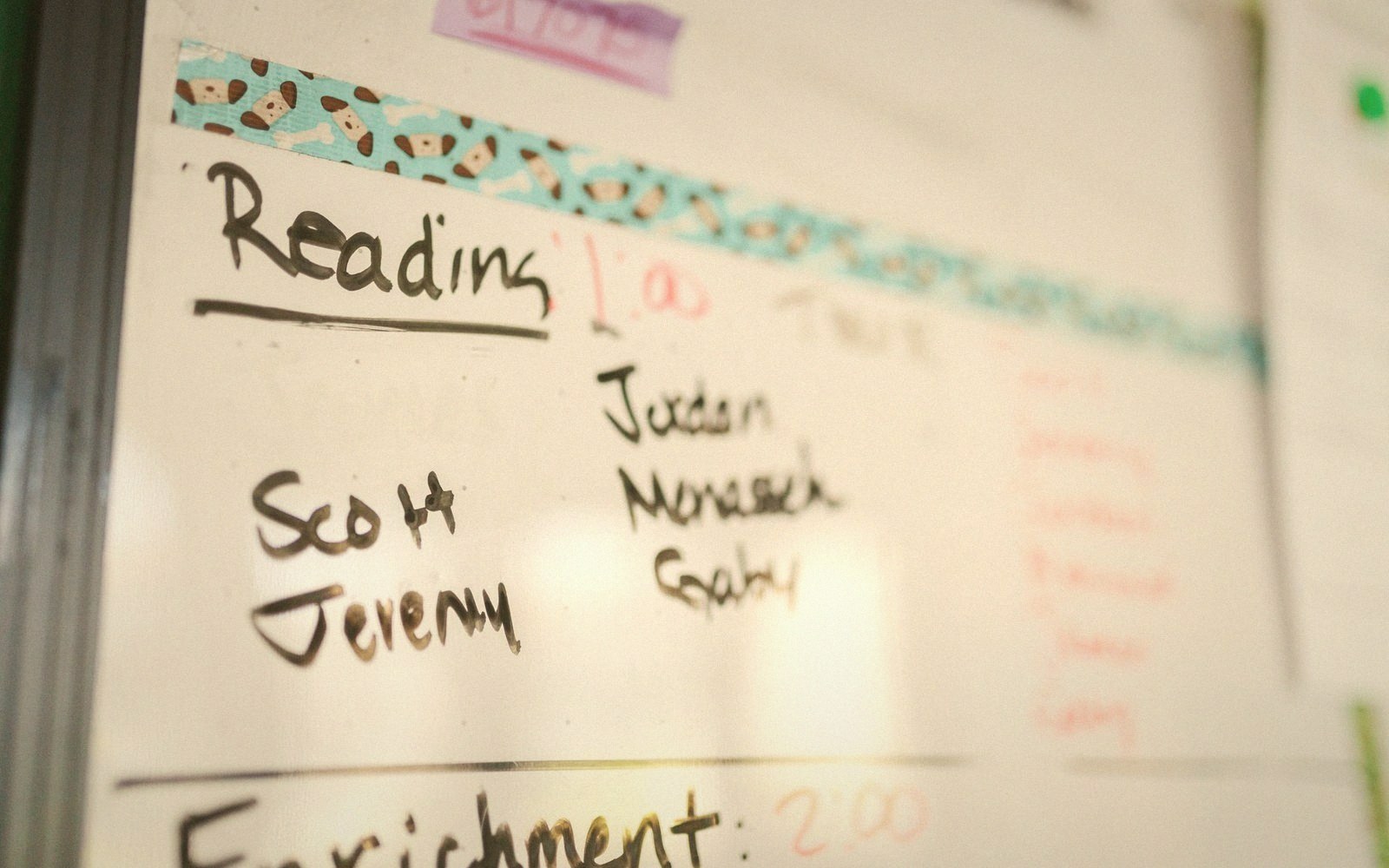
The rota that holds all this together is a piece of logistics as tightly engineered as a hospital ward's. Unlike a ward, it tends to run on a skeleton. Many shelters operate with one or two kennel staff per block on a given day, with volunteers filling gaps in walking and socialisation. Cover for sickness or holiday does not always arrive: the animals still eat, but the rest of the day compresses.
What slips, and when02.2
There is a reliable hierarchy to what gets cut when staffing is short, and it is not arbitrary. The non-negotiables — feeding, watering, basic sanitation — hold because they must. They are visible, auditable and tied to legal welfare standards in most jurisdictions. What gives way first is time: time per animal, time per walk, time spent quietly in a run observing behaviour.
Enrichment is typically the first scheduled item to disappear from a short day. It takes preparation — gathering materials, setting up activities, monitoring whether an animal is engaging or stressed — and none of that is compressible into a two-minute handover. Occupation, choice and something to do with the nose are exactly the things that blunt the psychological wear of kennel life; they are also exactly the things that vanish when the morning is already behind schedule.
The second casualty is observation. Behaviour staff and experienced kennel assistants accumulate knowledge of each animal through daily contact — how a dog greets the cleaner, whether a cat has eaten overnight, what the baseline looks like — and that accumulation is the observation that beats the test. Rushed rounds produce rushed notes, or no notes. An animal whose behaviour is shifting goes unrecorded. The intake card fills out with thin data at exactly the point when richer data would inform matching.
Socialisation — purposeful, calm human contact beyond the functional — is the third item to compress. It is not nothing that a dog gets walked. But there is a difference between a fast circuit of the exercise yard and ten minutes of unhurried contact with a person who is paying attention to the animal rather than the clock. For an animal already stressed by noise, confinement and unfamiliar smells, unhurried contact is not a luxury; it is part of what keeps behaviour readable.
These are rarely leisurely: a kennel assistant managing a block alone may have fifteen to twenty animals and a two-hour window before afternoon cleaning begins.
None of this is a criticism of individual workers. A kennel assistant who is late because they are doing three people's jobs is not failing the animals; the system around them is. The rota is a design document, and what it reveals on a difficult Tuesday morning is how much margin was built in — and whether enrichment and observation were ever treated as core tasks or as extras to be honoured when time allowed.
The timetable, honestly kept, is one of the most useful things a shelter produces. The gap between the rota on paper and the rota as lived is where animal welfare lives and, sometimes, where it erodes.